
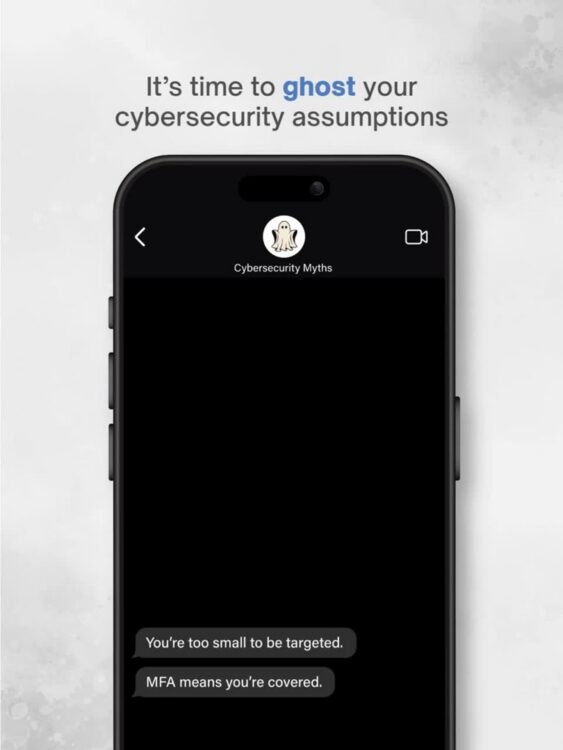
October is Cybersecurity Awareness Month, making it a good time for small businesses and nonprofits in Billings to separate cybersecurity facts from assumptions.
For organizations with 5 to 50 employees, cybersecurity can easily feel like something that belongs on the IT checklist. You have customers or donors to serve, employees to manage, budgets to watch, and daily operations to keep moving.
Unfortunately, some of the most common cybersecurity assumptions can create the biggest vulnerabilities.
Cybercriminals don’t need your organization to be large. They need an opportunity—an exposed account, a convincing phishing email, an employee who approves the wrong request, or a backup that doesn’t work when you need it.
The good news is that many of these gaps can be addressed once you know where to look.
Here are six cybersecurity myths Billings small businesses and nonprofits should stop believing.
Myth #1: “We’re Too Small for Cybercriminals to Care About”
It’s easy to think cybercriminals are primarily interested in large corporations with millions of customer records.
However, being smaller doesn’t make your organization invisible.
A Billings accounting firm, nonprofit, contractor, professional services company, or other small organization may still have valuable information and access, including:
- Employee and customer information
- Donor records
- Financial accounts
- Email accounts
- Payment information
- Vendor relationships
- Microsoft 365 or other cloud accounts
In many cases, attackers aren’t manually choosing an organization because of its size. They’re looking for opportunities.
If they find a vulnerable account or system, they may take advantage of it.
FACT: Cybercriminals look for opportunities, not just large organizations.
Myth #2: “Our Employees Will Recognize a Phishing Email”
Remember the phishing emails filled with spelling mistakes, strange formatting, and suspicious-looking links?
They’re getting much harder to spot.
AI can help criminals create polished, professional messages that look like they came from a business owner, coworker, vendor, executive director, or another trusted source.
Therefore, employees can’t rely on grammar alone to determine whether a message is legitimate.
Instead, teach your team to pay attention to the request itself.
Would this person normally:
- Ask you to change payment instructions?
- Request sensitive employee or customer information?
- Send an unexpected login link?
- Ask you to purchase gift cards?
- Pressure you to act immediately?
- Suddenly ask you to send money to a different account?
If the request seems unusual, verify it using another trusted communication method before responding or clicking.
FACT: A professional-looking email can still be a scam.
Myth #3: “MFA Means Our Accounts Are Completely Protected”
Multi-factor authentication (MFA) is one of the important layers organizations can use to protect accounts.
However, MFA doesn’t mean you can forget about everything else.
For example, attackers may repeatedly send authentication requests hoping an employee eventually approves one. This is sometimes called MFA fatigue or prompt bombing.
An employee may assume the repeated requests are simply a technical problem and tap “approve” to make them stop.
That’s why MFA works best as part of a broader cybersecurity strategy that includes secure account configurations, employee awareness, monitoring, and other protections.
Most importantly, employees should know what to do when they receive an MFA request they didn’t initiate.
FACT: MFA is an important security layer—not your entire cybersecurity strategy.
Myth #4: “We Have Backups, So We’re Covered”
Here’s a better question:
If your organization lost access to its files tomorrow morning, could you restore them—and how long would it take?
Simply having a backup doesn’t answer that question.
Backups need to be monitored and tested so you know your data can actually be recovered.
For a small business, downtime can mean employees can’t work or customers can’t be served. For a nonprofit, it could mean losing access to donor information, program records, financial information, or other systems needed to fulfill your mission.
Therefore, your recovery strategy needs to consider more than whether a backup exists.
You also need to understand how recovery works and how quickly your organization can reasonably resume operations.
FACT: Having a backup isn’t the same as knowing you can recover.
Myth #5: “Cybersecurity Is Our IT Provider’s Responsibility”
Your IT provider plays an important role in protecting your organization.
But they can’t control every email an employee opens or every request an employee receives.
Cybersecurity decisions happen throughout your organization every day.
Someone receives an unusual invoice. Another employee gets a password-reset request. Someone else receives what appears to be a message from the owner or executive director requesting sensitive information.
That’s why employee cybersecurity awareness matters.
Employees should know how to recognize suspicious behavior, verify unusual requests, and report something that doesn’t seem right.
You don’t need every employee to become a cybersecurity expert.
You need them to know when to stop and ask for help.
FACT: Cybersecurity is a team responsibility.
Myth #6: “We’ll Know What to Do if Something Happens”
Imagine arriving at work Tuesday morning and discovering that several employees suddenly can’t access their files.
What happens next?
Should employees shut down their computers?
Who calls your IT provider?
Who notifies the owner, executive director, or leadership team?
What happens if email or phones aren’t available?
When should your cyber insurance provider be contacted?
Who communicates with customers, donors, vendors, or other stakeholders?
Those decisions are much harder to make when you’re already dealing with an incident.
Instead, create an incident response plan before you need one. Establish responsibilities, document important contact information, and determine how your organization will communicate if normal systems aren’t available.
Then review the plan periodically as employees, vendors, and technology change.
FACT: Your incident response plan shouldn’t make its debut during an actual incident.
Cybersecurity Awareness Starts With Knowing What’s Actually Protecting You
Cybersecurity Awareness Month isn’t about making technology more complicated.
It’s an opportunity to challenge the assumptions your organization relies on every day.
For Billings small businesses and nonprofits with 5 to 50 employees, ask yourself:
Do we know these protections are working—or do we simply assume they are?
There’s a big difference between having security tools and having a cybersecurity strategy.
At NextX, we help small businesses and nonprofits throughout Billings and Yellowstone County take technology responsibilities off their leadership team’s plate. From cybersecurity and employee awareness to backups, recovery planning, and ongoing IT support, our goal is to help protect the technology your organization depends on.
If some of these cybersecurity myths sounded a little too familiar, now is a good time to find out where your organization actually stands.
Schedule a free 10-minute discovery call with NextX.
Call 406-671-7171 or visit nextx.net.
Free IT Consultation | NextX Communications, Inc. | Billings, MT